Our reputation as believers in the surrounding community is very important: people can be attracted to Christ or turned away from him based on how we live! But our reputation before God is even more important. That is the message of Isaiah 1:10-20, and that forms the theme of Pastor David’s sermon this week. Click here to listen to his message on this challenging passage of scripture.
Pastor’s Appreciation

This past month was “Pastor Appreciation Month,” and I have to admit: I feel very appreciated! Thank you to all of you who sent cards, gave gifts, wrote notes, and participated in last Sunday’s potluck dinner after church. None of those expressions of appreciation are required; they are all “bonus blessings” from my perspective. I feel confident in speaking on behalf of Pastor Jerry when I say that we are both deeply grateful and appreciative of you, the good people of Mt. Haley Church of God.
As this month draws to a close, I think it is proper to turn things around. Another way to read “Pastor Appreciation Month” is to ask the question, “For what is your pastor appreciative?” So here is a short summary of a few reasons that I am grateful to be your pastor:
- Your hard work and volunteer attitude. Tara and I have frequently commented on how blessed we are to serve a church that serves! Any time a need arises in our congregation or community, we can count on several people – depending on the required skill sets – showing up to lend a hand. Packing groceries, hauling wood, raking leaves, cooking meals, providing transportation … you serve in wonderful ways.
- Your willingness to learn about the Bible. I am grateful that every single approach to teaching the Bible I have tried has worked – whether Sunday morning sermons, Sunday evening Bible studies, devotional booklets, or anything else! I think back to the study on Revelation we finished about a year ago, and I see a congregation full of people who are really interested in tackling the hard stuff. That’s an enormous help to your pastor!
- Your gentleness and flexibility. Do you realize that Tara and I have served here three years already? And do you remember that this is the first and only church I have ever pastored? I continue to be amazed at how smoothly you grafted me into the church family and how easy you have made it for me to work with you over the past few years. You truly are a blessing to me!
Take a few minutes to read the first eleven verses of Philippians. Those are the words Paul wrote to his beloved congregation in Philippi. I think they speak very well of my appreciation for Mt. Haley Church of God, as well!
–Pastor David
Reengaging as the Church of God
Last week, something fascinating unfolded on Facebook. Church of God Ministries, our national office in Anderson, maintains a Facebook page to help Church of God people connect with each other. (It’s very similar to Mt. Haley’s Facebook page, but it reaches a much broader audience than ours does.) Occasionally, the people who maintain that page will ask a question, post a thought, or share a picture – and usually not a whole lot of discussion takes place.
That was not the case this week, when Church of God Ministries asked these questions: “How can the Church of God re-engage congregations, from California to the New England states? And, what would you say the Church of God needs to do to re-engage the younger generation?”
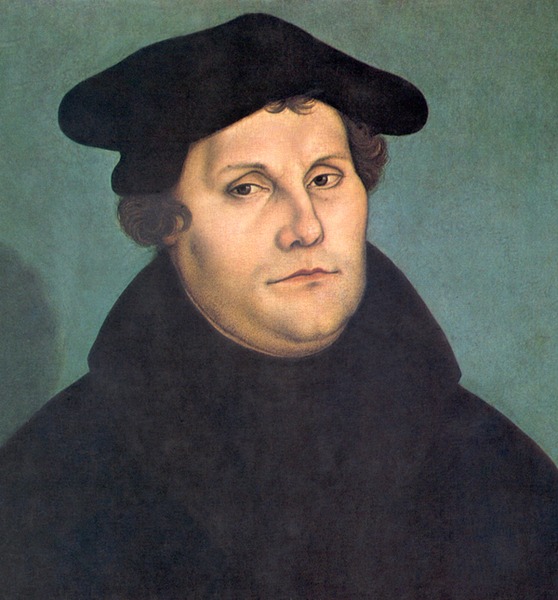
What followed was an intense, thoughtful discussion involving many different individuals. This is rather unusual for Facebook, especially for an online discussion about faith-related issues! Many of the responses were short and terse calls to “preach the Word of God alone” and “get back to the basics” – a kind of “scripture only” stance that many Christian groups have called for over the years. (In Latin, one would say “sola scriptura“; that phrase was a guiding principle of the Protestant Reformation led by Martin Luther in the 1500s.) While I agree with the principle, there’s nothing uniquely Church of God about that stance.
Many people discussed our annual national campmeeting, which has always been held in Anderson, Indiana. Some people are calling for a moving, rotating convention so that people in all locations have equal opportunity to attend a campmeeting that is close to them. Others are concerned about programming, service opportunities, and speakers at these conventions. Several mentioned how the 20-to-30-something age bracket is missing at the national campmeeting and, not coincidentally, in our local congregations. Again, many church groups (we can use the word “denominations”) are struggling with issues like these.
But one theme kept popping up over and over. While all of the above issues are important, the identity of the Church of God resurfaced again and again as a question that needs to be answered. If we are just another church group that holds annual conventions and connects local churches together and is losing touch with people in their third decade of life, then woe to us. If we do not have compelling reasons to exist as “The Church of God (Anderson, Indiana),” then perhaps we should join arms with other like-minded church groups like the Nazarenes, Free Methodists, and Wesleyans. I would argue that history, tradition, hymnody, emotional attachment, and generational connectedness are not good reasons to exist as a denomination. (These were many of the ideas mentioned in the Facebook discussion!)
Christian faith is about one thing – salvation through Jesus Christ – and the far-reaching consequences of that salvation. We live in a time of great division and distinction among church groups, and truthfully I don’t see that changing any time soon. Denominations are here to stay. While some might question the legitimacy and validity of other church groups (and this is part of our history in the Church of God), I believe each group has something important to contribute to the conversation about salvation through Jesus Christ.
This is what we as the Church of God must figure out in the years that lie ahead. What is it about our history, theology, hymnody, and traditions that leads us to contribute something unique to the global conversation about Jesus Christ? Why do we exist as a people?
Only once we have answered these questions will we be able to address the issue of reengaging widely diverging congregations and generations.
Pastor David
P.S. You can read the full Facebook conversation here:
Finishing Well
As we conclude our study of Paul’s final letter in the New Testament, Pastor David preaches on 2 Timothy 4:6-8, 16-18, in which Paul reflects on having finished his life’s race. In God’s timing, this sermon came just hours after one of our elderly saints passed away after a long illness. Listen in on this timely word from the Lord:
Pursuing Peace
Jesus said some challenging words in the Sermon on the Mount, found in our New Testament in Matthew chapters 5, 6, and 7. Today I’d like you to take a few moments to find and read Matthew 5:38-48. Do that, if you would, before reading the rest of this article.
There is something counter-cultural about the way Jesus calls us to live. In the first-century world, the relatively young Roman Empire controlled Palestine, the area in which Jesus lived and ministered. Jews such as Jesus could have been forced to assist Roman soldiers in carrying supplies and materials for certain distances. Walking “the second mile” thus became something counter-cultural, almost revolutionary: it broke down the difference in power between a Jew and a Roman.
In the first-century world, if someone slapped you (with his right hand) on your right cheek, this was a power-building maneuver: the aggressor states his dominance over you with this action. Turning the other cheek (to receive another slap), as Jesus instructs, leaves the aggressor with an uncomfortable choice. Either he must use his left hand, which was considered unclean, or he must use his right hand again – but this time using the front of his hand, not the back of his hand, to strike your left cheek. Slapping with the front of the hand was understood as a challenge between equals; you might expect the aggressor to say “I challenge you to a duel!” at this point. Again, this is counter-cultural, almost revolutionary: Jesus tears down expectations of power-based relationships between people.
One year ago, a teenage girl stood up for the right of girls like her to receive an education. As a result, in October 2012 she was targeted by aggressors who wished to silence her message by eliminating the messenger. She and several others were shot, many of them killed, but she survived the gunshot wounds to her face. This girl spent the next year recovering and continuing to speak out against the injustices in her world. She became so well-known and beloved for her positions supporting justice and peace that she was nominated for the Nobel Peace Prize this year. Her name? Malala Yousafzai, a sixteen-year-old Pakistani girl.

In a recent television interview, Malala said something truly astounding. When asked what went through her mind when she realized the Taliban (her eventual attackers) wanted her dead, she said:
I started thinking about that, and I used to think that the Talib would come, and he would just kill me. But then I said, ‘If he comes, what would you do Malala?’ then I would reply to myself, ‘Malala, just take a shoe and hit him.’ But then I said, ‘If you hit a Talib with your shoe, then there would be no difference between you and the Talib. You must not treat others with cruelty and that much harshly, you must fight others but through peace and through dialogue and through education.’ Then I said I will tell him how important education is and that ‘I even want education for your children as well.’ And I will tell him, ‘That’s what I want to tell you, now do what you want.’
Malala Yousafzai is a practicing Muslim. Jesus is seen as a prophet within Islam, and in many ways I see Malala’s words above echoing Jesus’s thoughts from the Sermon on the Mount. What she said is counter-cultural, both in Pakistan and in the western world. Her stance toward her aggressors breaks down power dynamics and asserts the ultimate value that each person in the world has in God’s eyes.
What if we were to pursue peace as strongly in our own lives? What if we loved and prayed for our enemies? What if this is what it means to be “perfect” or “complete” or “mature,” as Jesus commanded us to be, in imitation of our heavenly Father?
Pastor David
Fulfilling Your Ministry
What do running a 5k, having itching ears, and serving in the church have in common? Well, they all are part of Pastor David’s reflections on 2 Timothy 3:14-4:5, the sermon text for this week’s message. As we continue our study of this letter to Timothy, how does this passage call us to fulfill our own roles within the church? Listen in to the sermon by clicking this link.
The Unchained Melody
In 2 Timothy 2:8-15, Paul writes to Timothy some words of encouragement and reminder about what is really important. Rather than quarreling about words, Timothy and the church people he serves should hold fast to the eternal Word of God, Jesus Christ. How can this passage transform the way we use words in our everyday lives? Listen in to Pastor David’s sermon on this topic:
Carrying the Baton
This week, we begin a study of 2 Timothy, a letter from Paul to a young church leader who is charged with “carrying the baton” of Christian faith into a new generation. With whom do we identify, Paul or Timothy? How should we run the race? And how does this metaphor affect our daily lives? Listen in to Pastor David’s sermon on 2 Timothy 1:1-14 by clicking the link below:
Changing Colors
It’s that time of year again – those few weeks, here in central Michigan, during which millions of leaves change color and fall to the ground. This could cause a number of reactions within you: anticipation of the winter months that lie ahead; excitement for the prospect of earning money by raking leaves; or simply amazement at the colorful beauty of the earth.

I have been struck by this beauty in the past week or two. Even on my short walk from home to the church, I can see many shades of red, yellow, orange, and purple – all signs of the changing seasons. Have you ever wondered about why leaves change color in the fall? It has been a while since I studied trees in elementary school, so I Googled the subject and found 38.7 million results. It’s a popular subject!
As you may remember, leaves are green because they contain chlorophyll, a pigment crucial to the process of photosynthesis. Chlorophyll helps plants create energy from sunlight; it absorbs light with wavelengths in the red and blue areas of the spectrum. But chlorophyll reflects green light, which is why living leaves look green.
The trouble is that chlorophyll constantly decays, so it must be constantly replaced by plants. All spring and summer long, chlorophyll helps plants store up energy so that they can survive the winter. But when the days grow shorter in the fall and sunlight becomes less readily available, plants stop producing chlorophyll. At that point, leaves begin to die, slowly lose their greenness, and change into colors that really have been there all along but were covered up by the green pigment.
If you are sensing that I might turn this into an analogy about our spiritual lives, you are figuring me out: there’s a sermon in everything! However, I don’t want to compare our lives as believers to the changing colors of leaves for two reasons:
- Spiritual life is not cyclical. While trees go through this process year in and year out, we are not guaranteed regular, recurring periods of “spiritual dryness.” There may be seasons in which we wander in the wilderness, but the light of God does not take a winter-long vacation from us.
- The sin nature is not always lurking, buried deep within us. If we think of “green” as “life in Christ” and “red/yellow/etc.” as “sinful living,” then we might reason that our sinfulness is always buried just beneath the surface; if the greenness ever fades away, our “true colors” will show. But this is not the case. Salvation is about the gift of a new identity; our sins, red as scarlet, have been washed away by the blood of the Lamb, making us white as snow (Isaiah 1:18). We may turn from Christ and return to sin, but it is not as if sin were lurking inside us, waiting for the right opportunity to take over.
Take a minute to read John 15:1-17, in which Jesus says he is the vine and we are the branches. One thing is for sure: leaves (branches) do not stand a chance of surviving if they are disconnected from the tree (vine). Let’s stay green (bear fruit); let’s remain connected to Christ and to each other. Let’s continue to find new ways to love each other during the changing seasons of our lives!
–Pastor David
Prayer Changes Us: Supplication
In this final message during the month of “Septem-prayer,” Pastor David preaches on Psalm 34, an acrostic psalm in which each verse begins with the next letter of the Hebrew alphabet. How can this psalm transform the way in which we pray for specific needs? How should our prayer lives be more full than simply praying for the sick, grieving, or discouraged? Listen in to yesterday’s sermon: